
Small-Business Content Strategy
10 Ways Social Content Can Keep Working After It Is Posted.
Social content is not one post that lives or dies in a day. It can be reposted, recycled, recut, searched, saved, shared, and reused when it is planned with a longer lifecycle.
By Maverick Beach / June 10, 2026
This guide combines source-backed context with Maverick Beach Creative’s working approach to planning and producing small-business content.
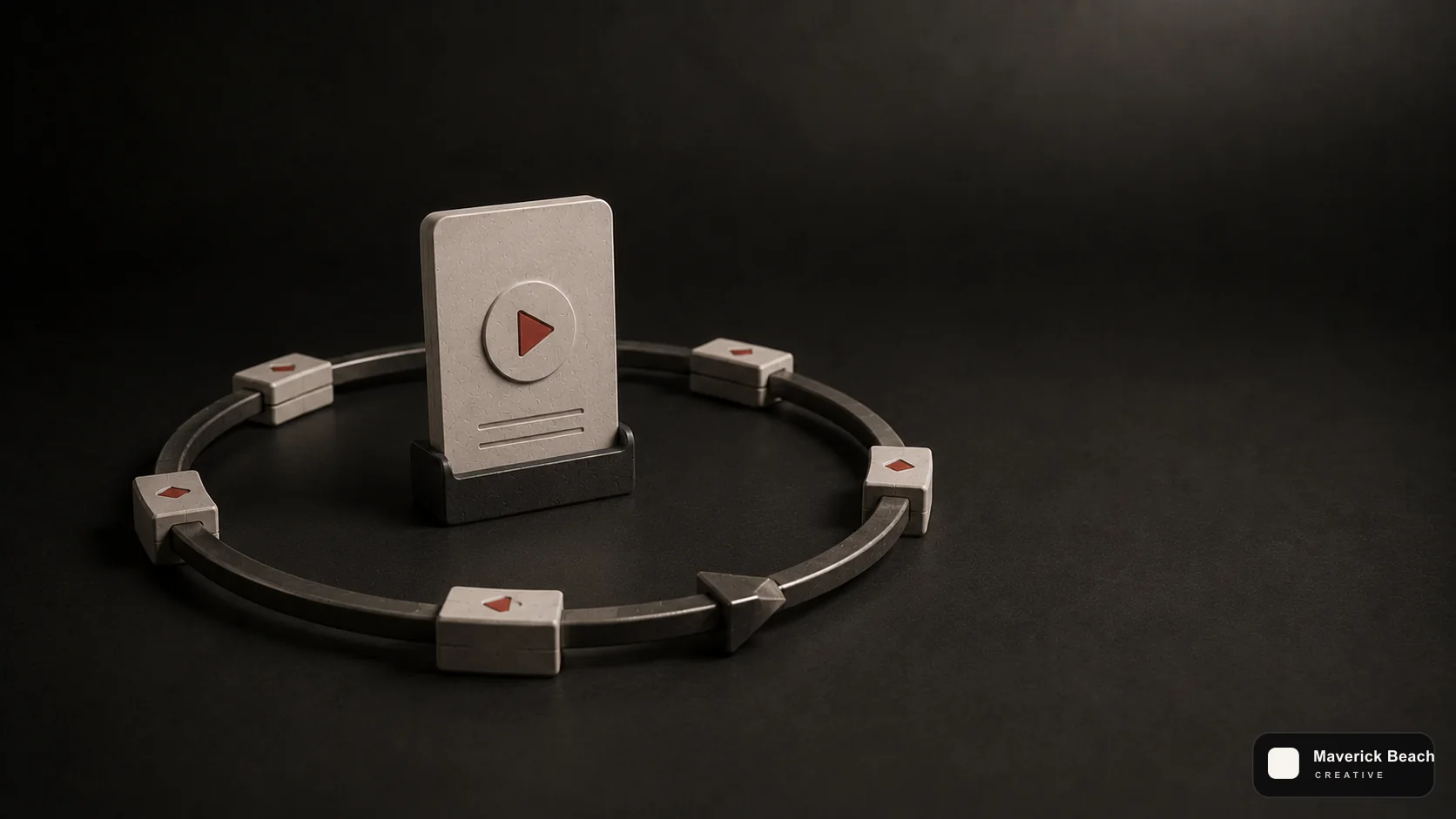
Social content is not one post that gets one chance and then disappears forever.
A useful piece of content can be reposted, recycled, recut, turned into a shorter clip, expanded into a longer video, used on a website, sent in a sales conversation, referenced in an email, or brought back months later when the timing makes sense.
That is why content matters. Not because every post becomes viral. Because every strong piece adds to a library the business can keep using.
1. Content has a lifecycle.
A social post usually has a first push, a discovery tail, and a reuse life. The first push is what happens right after publishing. The discovery tail is what happens when the platform keeps testing or surfacing it. The reuse life is what happens when the business brings the idea back later.
A good post should not be judged only by the first few hours. Some content is there to answer a question, create trust, support search, or become useful again when the business needs to explain the same thing later.
2. You can repost more than you think.
Reposting is not automatically lazy. It is lazy when nothing changes and the post was weak the first time. It can be smart when the idea is still useful, the audience did not all see it, the timing is better, or the business has a new reason to say it again.
Most customers do not see every post. Most followers do not remember every post. A strong idea can come back with a new hook, new caption, new first frame, new edit, new platform, or new context.
A practical rule: do not repost the exact same thing the next day and expect magic. Give it a real gap, then bring it back when there is a new angle. That might mean a different caption after a few weeks, a tighter cut after 30 to 60 days, a seasonal version next quarter, or a refreshed version when the same customer question comes up again.
- Repost evergreen answers when customers keep asking the same question.
- Recycle seasonal posts when the season returns.
- Bring back a strong clip with a better opening.
- Reframe a useful point for a different platform.
2.5. The same video can have multiple lives.
A video is not only the file you post once. It is the footage, the idea, the hook, the caption, the first frame, the platform version, the timing, and the context around it.
The same clip can be a Reel with one caption, a TikTok with a faster hook, a YouTube Short with a clearer title, a Facebook post with more context, a website clip with no trend language, and a sales follow-up that answers a specific question. Those are different lives for the same useful asset.
This is where the content lifecycle becomes real. First publish. Then watch the signals. Then recut, repost, re-caption, or reuse it somewhere else. The point is not to spam the same asset. The point is to keep useful footage working until it has actually reached enough of the right people.
3. One shoot can create a content library.
The best social content is often planned before the camera comes out. One shoot can create the main video, short vertical cuts, detail clips, sound moments, stills, captions, website clips, and future posts.
That only works when the shoot is planned around the content lifecycle. If the plan is only 'get a cool video,' useful material gets left on the table.
4. Views matter, but not by themselves.
Views matter because they show distribution. If nobody sees the content, it cannot build familiarity, answer questions, or create trust.
But views are not the whole score. A high-view post can still attract the wrong audience or fail to move anyone closer to understanding the business. A lower-view post can be valuable if it reaches the right people, gets shared, saves a sales conversation, or answers a question buyers actually have.
5. Likes are weaker than they look.
Likes still mean something. They can tell a platform and the business that people reacted positively. But a like is usually a light signal.
Saves, shares, comments with substance, profile visits, link clicks, watch time, completion, replies, quote requests, and real conversations often say more about whether the content did a useful job.
6. Followers still help, but they are not the whole audience.
Followers still matter because they create a warmer base of people who chose to hear from the business. But modern feeds are not only follower feeds.
TikTok, Instagram Reels, YouTube Shorts, Facebook, X, web search, and recommendation surfaces can show content to people who do not follow the business yet. That is why the content itself matters. The platform is constantly asking whether a piece is worth showing to the next person.
7. Algorithms reward behavior, not just popularity.
Every platform works differently, and none of them publish the full recipe. But the pattern is clear: recommendation systems look at how people behave around content.
Do they watch? Do they finish? Do they share? Do they save? Do they click? Do they search the topic? Do similar people keep engaging? That does not make strategy simple, but it does mean useful content has a better chance than empty posting.
TikTok is heavily behavior-driven: watch time, completion, rewatches, interactions, captions, sounds, hashtags, and user interests can all matter. Instagram uses different systems for Feed, Stories, Explore, and Reels, so a Reel can behave differently from a carousel or Story. YouTube cares about viewer satisfaction over time, not just the first click, which is why a useful Short or video can keep getting discovered after the first day.
That means timing is not identical across platforms. Some posts get an early test and fade. Some get a delayed second push. Some keep moving because search, recommendations, shares, or saves keep giving the platform reasons to show them again. The safest strategy is to make content clear enough to perform in the first seconds and useful enough to have a longer tail.
- Improve the opening: show the point fast.
- Improve retention: cut the dead space and keep the pacing intentional.
- Improve clarity: use captions, on-screen context, and titles people understand.
- Improve sharing: answer something people would send to a friend, customer, teammate, or future buyer.
- Improve reuse: keep clean versions that can be recaptioned, recut, or reposted later.
8. The same idea needs different packaging.
The idea may stay the same, but the format should change. A customer question can become a TikTok, Instagram Reel, Facebook post, YouTube Short, website FAQ, email section, sales follow-up, and longer resource article.
That is not copying and pasting. It is adapting the same useful point for how people behave in each place.
10. Consistency is about memory, not noise.
Posting constantly is not the same as being consistent. Consistency means the business keeps showing up with recognizable ideas, useful answers, proof, process, people, and reasons to care.
The goal is not to feed the machine with filler. The goal is to build memory. When the right person is ready to buy, book, visit, order, or ask for a quote, the business should already feel familiar.
How Instagram Trial Reels can be used for testing.
Instagram Trial Reels are worth paying attention to right now. They let eligible creators test a Reel with non-followers before pushing it to their existing audience. Instagram says creators can review early performance signals, then choose whether to share the Reel more broadly or let Instagram auto-share based on performance.
For a small business, that is useful because it lowers the risk of experimenting. You can test a new hook, topic, edit style, customer question, behind-the-scenes clip, or offer angle without making every experiment part of the main feed immediately.
The smart use is not to dump random experiments into Trial Reels. Use them for controlled tests: two different hooks, a new content category, a more direct offer, a stronger first frame, or a clip you think might work but are not sure your current followers will care about. If it wins with cold viewers, that tells you something.
What this means for a small business.
The smartest move is to stop treating social content like disposable daily homework. Treat it like a useful library.
Plan shoots around what can be reused. Edit for multiple placements. Keep strong ideas alive. Track more than likes. Watch what people save, share, finish, ask about, and bring up in real conversations.
- Make fewer random posts.
- Build more reusable assets.
- Repost strong evergreen ideas with new context.
- Measure signs of attention and usefulness, not just vanity reactions.
- Use each shoot to create a longer content lifespan.
How this applies to businesses in Bend and elsewhere.
The goal is usually not to imitate a national brand. It is to make the real business easier to understand, remember, and trust through practical finished content.
Based in Bend, Oregon, the strategy work helps small businesses decide what to make, what it should do, and the cleanest realistic place to start.
Sources7 references used for context
This guide combines source-backed context with Maverick Beach Creative’s working approach to planning and producing small-business content.
- 2026 State of Video Report — WistiaProvides context on modern video workflows, distribution, and repurposing.
- Video Content Creation Strategy, Tips & Tools — YouTube CreatorsSupports planning video around the audience, topic, format, and purpose.
- How TikTok recommends content — TikTok Help CenterExplains that TikTok recommendations use signals such as user interactions, video information, and device or account settings.
- How Instagram Works — InstagramExplains that Instagram uses different signals across Feed, Stories, Explore, and Reels rather than one universal algorithm.
- Instagram will let creators test experimental reels on random people — The VergeReports Instagram's Trial Reels rollout and how creators can test Reels with non-followers before broader sharing.
- On YouTube's recommendation system — YouTube Official BlogProvides context on YouTube recommendations, viewer satisfaction, and signals beyond simple clicks.
- State of Video Report: Video Marketing Statistics for 2026 — WistiaSupports the value of planning video for multiple formats, channels, and lifecycle uses.
Related Next Steps