
Shooting Smarter
How One Shoot Can Create Multiple Pieces of Content.
Getting 20 pieces of content from one shoot is realistic, but only when the shoot is planned around the edit from the beginning.
By Maverick Beach / June 10, 2026
This guide combines source-backed context with Maverick Beach Creative’s working approach to planning and producing small-business content.
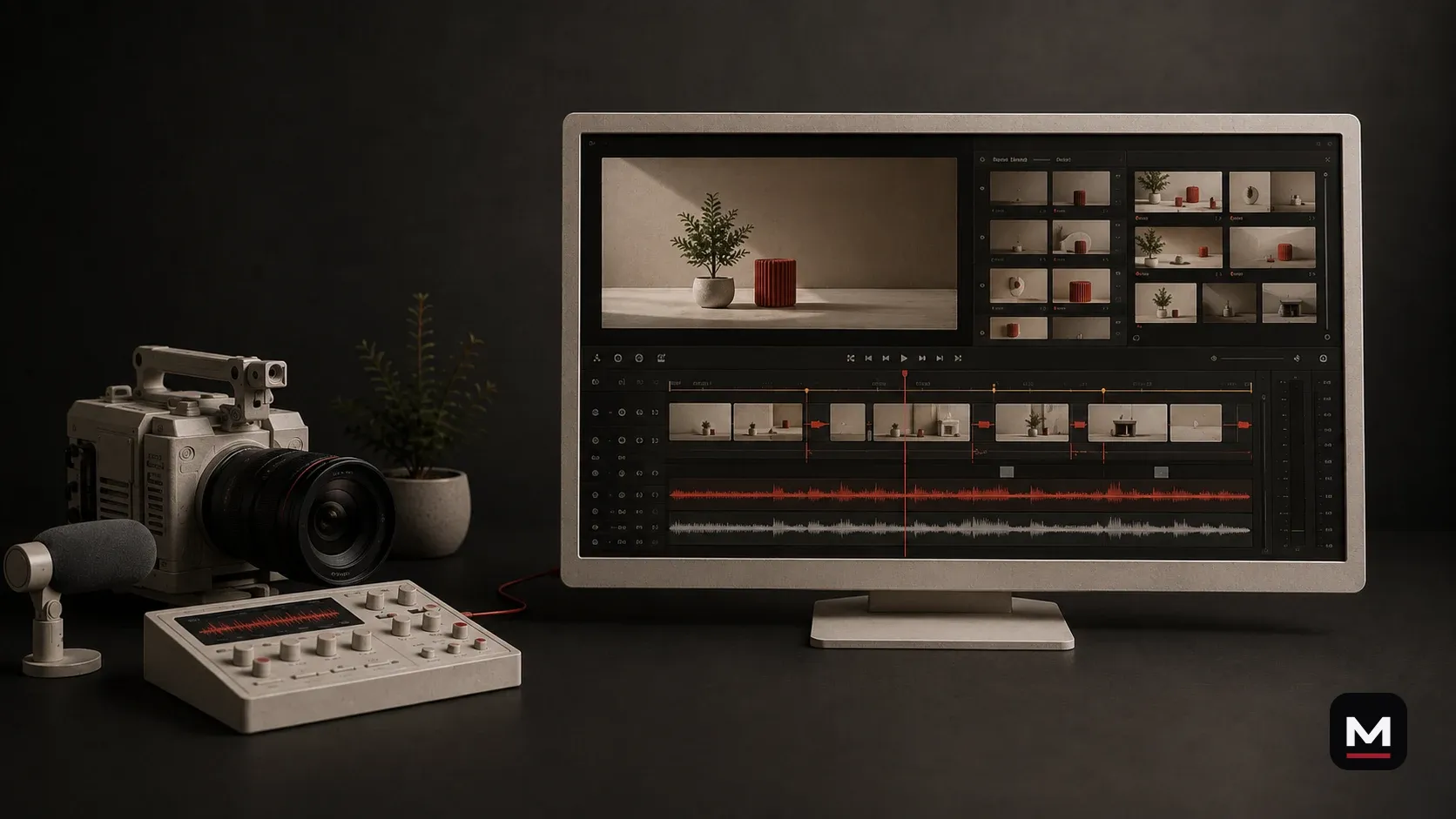
Most businesses do not need more random content days. They need one shoot that is planned well enough to become more than one video.
A shoot costs more than the invoice. It takes attention, planning, access, employee time, and some amount of disruption to the normal workday. If the business walks away with one finished video and nothing else, there is a good chance useful material was left on the table.
Getting 20 useful pieces of content from one shoot is realistic. But it does not happen because the camera stayed on longer. It happens because the shoot was planned around the edit from the beginning.
The goal is not to manufacture twenty disconnected posts. The goal is to capture one strong source story, then turn that source into a main video, smaller clips, product moments, website material, and the next round of content ideas.
One shoot should not be treated like one video. Planned correctly, one good shoot can become a full content system.
Stop planning every shortform video from scratch.
Planning twenty individual posts usually creates twenty scattered ideas, twenty separate decisions, and a pile of footage that does not feel connected.
Planning one strong longform shoot creates a source. That source already contains smaller content lanes: product details, customer questions, process clips, behind-the-scenes moments, visual proof, hooks, launch assets, and website material.
Shortform is not an afterthought. It is simply stronger when it comes from something with context.
A good editor sees those smaller stories while building the main video. They know where one topic ends, where a useful answer can stand alone, and where a small moment deserves its own edit.
That is where the multiplication happens. Not just in the shoot. In the edit.
Use longer videos as source material for shorter clips.
Planning longform first does not mean every business needs to become a YouTube brand. It means the full story gets planned before the smaller pieces are pulled from it.
The longform idea gives the shoot a spine. It defines what matters, what needs to be explained, which visuals are missing, what customers ask, and what the audience should understand by the end. The short clips can then branch from that structure without feeling random.
Before a shoot, the business needs to know the main point. That does not mean everything should be scripted word for word. Forcing people to memorize lines usually makes the video worse.
This is not Hollywood. You do not need actors. You need authentic people talking about something they actually know.
The best setup is usually a rough outline, a few strong questions, and the right person speaking naturally. Find the person who already understands the product, service, food, process, shop, or customer problem. Then let them explain it like they would to a real customer.
Good questions before the shoot.
Before one shoot can become twenty useful pieces, the direction needs to be clear. These are not planning questions for the sake of having a meeting. Each answer changes what should be captured and what can be delivered afterward.
- Subject: What are we launching, explaining, or trying to make more visible?
- Priority: Which products or services matter most right now?
- Customer questions: What does the business explain every day that could become its own clip?
- Platforms and deliverables: Where will the content live, and what formats will each place need?
- Existing footage: What is already useful, and what does not need to be reshot?
- Tone: What should people feel when they see the finished work?
- Proof: What does the audience need to see before they believe the claim?
- Long-term use: What would still be useful on the website, in sales, or during the next launch?
Plan the required shots without scripting every moment.
Too little planning creates chaos. Too much planning makes the content feel staged. The useful middle is a clear direction with enough room for real moments to happen.
People should know what is expected before shoot day. Nobody should be surprised or randomly forced onto camera. The person speaking should understand the subject and feel comfortable enough to sound like themselves.
Good production makes people prepared, not trapped. It creates structure without removing the reason the business was interesting in the first place.
Additional footage gives the editor useful cutaway options.
Most small businesses are not missing things to talk about. They are missing enough visual material to make those explanations watchable.
One continuous shot usually feels boring because there is no visual progression. The words may be useful, but the edit has nowhere to move.
B-roll is not filler. B-roll is what gives the edit somewhere to go.
It lets the viewer see the product while someone explains it, watch the process while hearing why it matters, and feel the environment instead of staring at one angle. It also gives the editor enough options to build multiple pieces without reusing the exact same sequence every time.
- people, process, product, environment, and details
- talking-head explanations
- before-and-after moments
- customer experience
- drone or establishing shots
- sound moments and behind-the-scenes footage
- hands working and tools, machines, food, gear, or products in use
- wide shots for context and tight shots for texture
- natural moments that make the business feel alive
What small businesses usually miss.
Most small businesses do not capture enough variety. They might have one shot of a product, one shot of someone talking, and one shot of the building, then expect that to become a month of content.
The content gets much better when you capture the environment around the thing.
For a restaurant, that means prep, plating, pouring, heat, movement, service, hands, reactions, the room, and the details people remember. For an automotive shop, it means tools, parts, hands working, trucks moving, explanations, sound, before and after, and the process behind the result.
For an outdoor brand, show the product in actual conditions. For a product business, show how it is used, what problem it solves, and what customers need to understand before buying.
What shots are overrated?
It depends. There is no universal list of shots that always matter or always do not matter. That is where taste comes in.
If a shot gives context, adds energy, explains the process, supports the message, or makes the business feel more real, it probably belongs. If it is distracting, slow, confusing, or only there because it looks cinematic, it probably does not.
Pretty shots are not automatically useful shots. A shot has to earn its place.
How to capture content without interrupting the business.
The best shoots do not take over the whole business. They work around it.
That means a lean team, a lean gear setup, a clear plan, and enough awareness to not make people feel weird while they work. Do not block the kitchen during service, stand in the worst possible place in a shop, or interrupt someone in the middle of doing the thing that makes the content good.
The point is to capture the business doing what it already does best.
What 20 pieces of content can look like.
Twenty pieces does not mean twenty completely different productions. It means twenty useful outputs built from one planned source.
The main video carries the full story. A trailer introduces it. Smaller clips separate the strongest topics, questions, products, and moments. Supporting footage becomes website material. The same finished work can also produce captions, thumbnails, still frames, and future ideas.
The list below is not magic. It is what happens when the shoot captures enough variety and the edit has a repurposing plan.
- One main longform video
- One recap trailer for the longform
- One shortform hook from the strongest opening moment
- One shortform product explanation
- One shortform process explanation
- One shortform customer-question answer
- One shortform behind-the-scenes clip
- One shortform before-and-after clip
- One shortform detail-focused clip
- One shortform owner or operator clip
- One shortform why-it-matters clip
- One shortform problem-and-solution clip
- One shortform atmosphere or energy clip
- One shortform sound-driven edit
- One shortform quote or takeaway clip
- One product video with voiceover
- A second product video with voiceover
- A third product video with voiceover
- A fourth product video with voiceover
- Website or landing-page video material
Do not start with the reel.
The main point of the shoot should usually be the larger story. Do not begin with a list of fifteen unrelated reels.
Plan the bigger piece first, then let shortform come from the strongest moments inside it. That gives every output the same voice, look, context, and direction.
Instead of planning twenty separate productions, plan one strong source and let the editing process multiply it.
Choose the format around the job.
A YouTube video can carry the bigger explanation, go deeper, and answer multiple questions in one place. A reel, Short, or TikTok should usually carry one idea at a time.
A photo can support websites, menus, product pages, social posts, and thumbnails. A website clip should be simple, visual, and immediately understandable. A launch asset should be sharper and more direct.
The footage can come from the same shoot, but the edit changes based on where the content needs to live.
Editing can turn one shoot into several finished pieces.
Shooting creates the raw material. Editing decides how much value the raw material can carry.
A good editor sees what is reusable, splits longform into topics, pulls hooks, turns a side comment into a useful short clip, and makes the same footage work in different places without making it feel repetitive.
The viewer does not care if the footage came from the same shoot. They care whether the takeaway is different.
Small businesses waste money when they shoot without a repurposing plan. The camera day ends, the one requested video gets delivered, and the rest of the useful footage quietly disappears onto a drive.
Sound editing improves clarity and polish.
Sound design plays a massive role in flow and retention, especially at the start of a video. Bad audio, awkward silence, harsh cuts, messy levels, or random music can make good footage feel cheap.
Good sound design adds rhythm, supports movement, makes transitions feel intentional, and helps viewers feel the environment instead of just seeing it. It should not be distracting, but it is a big part of why one edit feels polished and another feels unfinished.
Drone footage can show scale and location.
Drone should not be random aerial filler. It should show something ground cameras cannot.
Drone can establish location, scale, movement, property, access, surroundings, vehicles, outdoor space, or the relationship between the business and its environment. That is especially useful for restaurants, food trucks, bars, gyms, jewelry stores, clothing stores, thrift stores, automotive shops, fabrication shops, outdoor brands, product brands, local teams, motorsports, properties, events, and locations where context matters.
Where AI can help after the shoot.
AI can help organize ideas, generate captions, pull hooks, summarize talking points, split a longform video into possible shortform segments, and build a content calendar from the finished material.
That does not mean AI should make the creative decisions. A human still needs to know what matters, shoot it, edit it, and decide what feels right for the brand. AI can support the workflow. It should not replace the taste.
Why this matters for small businesses.
Small businesses usually do not have unlimited time or budget. That is exactly why this approach matters.
A single shoot can give a business weeks of useful content when it is planned and edited correctly. That is more efficient than constantly scrambling to post random clips, last-minute photos, or whatever someone remembered to capture on a phone.
You do not need to turn the business into a production set. You need to capture what is already happening in a smarter way.
We only need one video.
Maybe. Sometimes one video really is the job.
But if the shoot is already happening, one video is usually the minimum deliverable, not the whole opportunity.
The same footage can answer customer questions, show products, introduce people, explain a process, build trust, support a launch, create shortform clips, and improve the way the business looks online.
That does not mean every business needs to post constantly. It means the shoot should be planned with enough awareness to capture useful material while the access, people, products, and environment are already available.
We do not have enough happening here.
Business owners are often too close to their own work to see what is interesting about it.
The process feels normal because they see it every day. The explanations feel obvious because they have answered the same questions for years. The details disappear because they are part of the routine.
A content specialist sees those processes, details, explanations, and customer questions as material. If there are people, products, services, tools, food, movement, decisions, or expertise, there is usually something worth showing.
The goal is not to invent a fake story. The goal is to notice the story already happening and shape it so other people can understand why it matters.
How Maverick Beach Creative can help.
This is the kind of planning Maverick Beach Creative brings to a shoot.
The work can start by finding the larger story, deciding who should speak, and identifying the questions, products, process, and visuals that will make the footage useful later.
During the shoot, the setup stays lean enough to capture real work without becoming the center of attention. That includes the main explanation, the right B-roll, useful sound, and drone only when it adds context.
Afterward, the edit builds the main video, separates the strongest shortform topics, shapes supporting assets, and organizes the material into a more useful content library.
AI can help with captions, hooks, segmentation, planning, and organization. The footage, edit, taste, and final decisions stay human.
The goal is not more content for the sake of more content. The goal is to make the shoot worth more.
Final take.
One shoot should not just give you one video. It should give your business a main story, smaller clips, useful visuals, better website material, caption ideas, and a clearer plan for what to make next.
If your business is going to invest in a shoot, make the shoot work harder.
Plan the larger story. Capture the details. Give the edit enough material to do its job.
How this applies to businesses in Bend and elsewhere.
For a small business, the strongest footage is often already happening during normal work: service, preparation, tools, trucks, products, people, and the surrounding environment. The goal is to capture it without taking over the day.
Based in Bend, Oregon, with select Pacific Northwest projects, the planning starts with how the business actually operates, then builds the shoot around practical video, shortform, and YouTube needs. Editing includes audio-minded post; FAA Part 107 drone support is available when aerial context helps.
Related questionsAnswers if you want more context
How many videos can one shoot realistically produce?
It depends on the shoot plan and source material. One focused shoot can often support a main edit, several short clips, website snippets, product footage, photos, and future edits, but only when the deliverables are planned before capture.
What is a deliverable map?
A deliverable map lists what the shoot needs to become before filming begins. It connects each finished asset to the footage, format, audience, and intended use it requires.
What if we only need one good reel edit?
That is a valid first project. A Single Reel Edit is for businesses that already have usable footage and need one focused shortform piece with a clear hook, pacing, cleanup, captions, and a finished export.
How do I request a quote?
Request a quote by sharing the business, useful links, rough budget, timeline, and project context. The first response comes by email with a Free Content Fit Check when enough context is included, followed by useful questions, recommendations, and a realistic scope.
Sources3 references used for context
This guide combines source-backed context with Maverick Beach Creative’s working approach to planning and producing small-business content.
- State of Video Report: Video Marketing Statistics for 2026 — WistiaSupports the value of using different video formats for different jobs and repurposing across the video workflow.
- YouTube Shorts are getting less short — The VergeReports YouTube's change allowing Shorts up to three minutes.
- YouTube Shorts — YouTube CreatorsProvides official guidance and resources for creating and publishing Shorts.