
AI + Content
Responsible AI in Creative Work.
AI can support planning, organization, captions, notes, and workflow for small-business content. It is not the core offer, and it should not replace real footage, context, editing, sound, taste, or human judgment.
By Maverick Beach / June 10, 2026
This guide combines source-backed context with Maverick Beach Creative’s working approach to planning and producing small-business content.
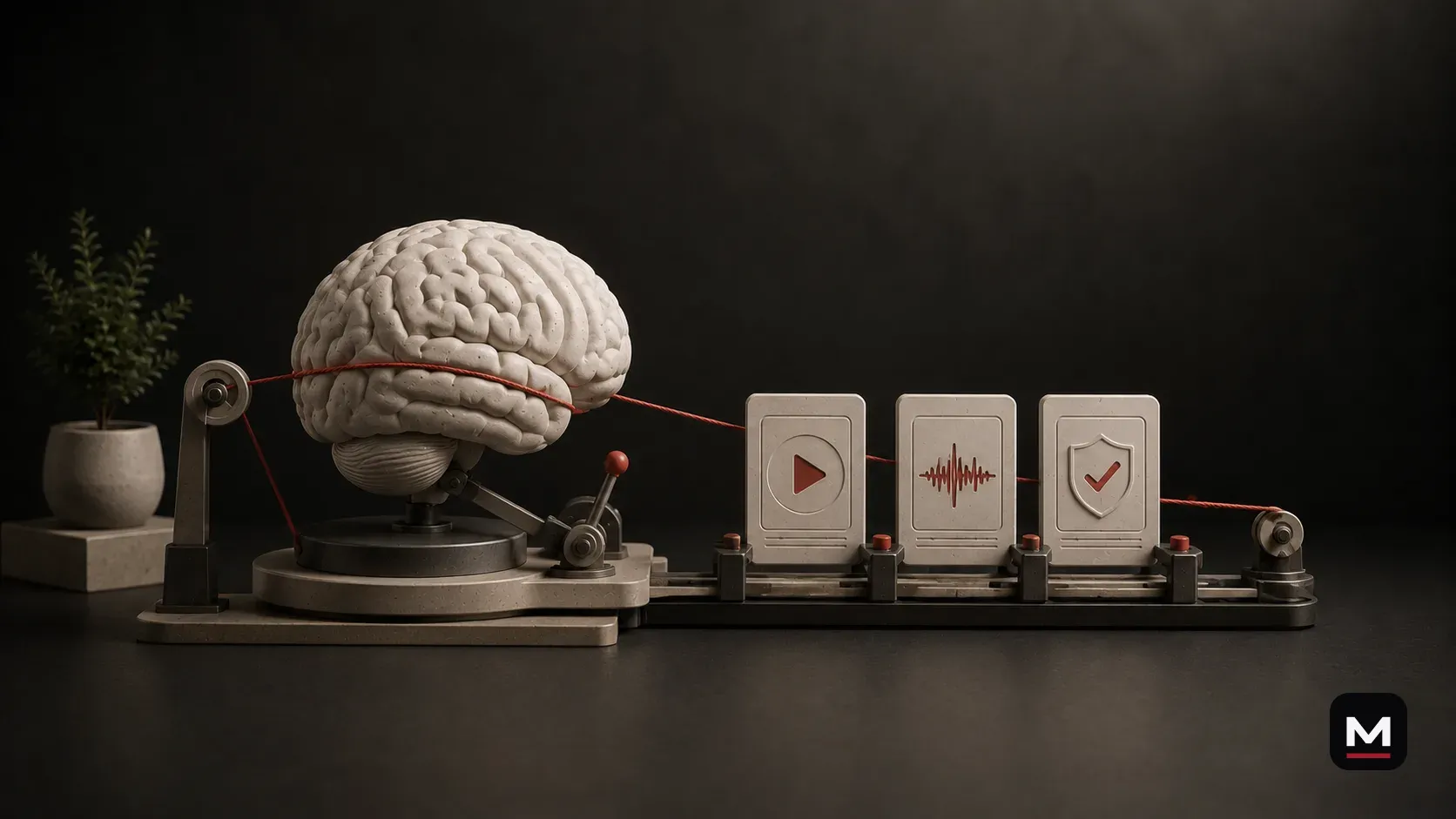
AI is everywhere now, and not everyone feels good about that. Fair.
Some AI content is lazy, generic, fake, or completely disconnected from the real business it is supposed to represent. There are also real questions about the infrastructure behind AI: data centers, energy, water, and whether every use of AI is actually worth it.
So here is the simple version: Maverick Beach Creative uses AI as workflow support, not as a replacement for the work.
AI-supported, not AI-replaced.
Where AI can assist without replacing human decisions.
AI can help organize messy ideas, turn notes into outlines, draft caption directions, summarize research, build shot list drafts, sort content themes, create workflow structure, and make planning more efficient.
That can be useful. A lot of content work is messy before it becomes clear.
But AI does not replace showing up, capturing real footage, understanding the business, editing with taste, sound design, pacing, knowing what to cut, knowing what to keep, or knowing what actually matters to the viewer.
AI can help organize the work. It cannot replace having something real to say.
- Organizing notes, ideas, customer questions, and rough directions
- Turning scattered thoughts into outlines, draft plans, and caption options
- Supporting research organization and workflow structure
- Helping a small business get from messy input to a clearer next step
Where AI is useful.
AI is useful when it helps sort the mess around the creative work.
A business owner might send a messy quote request. AI can help organize the notes into project questions. A Content Opportunity Audit might include scattered observations across the website, social pages, footage, and customer questions. AI can help group those observations into themes.
A video might need caption options. AI can help draft rough directions, then the final wording is rewritten or refined by a human. A business might have a long list of customer questions. AI can help organize those into possible content topics. A shoot might need planning. AI can create a first-pass checklist, but human judgment decides what matters.
AI is not the final authority. It is a tool for speed and organization.
Where AI should not replace the work.
AI should not replace real footage, client context, final creative decisions, editing taste, pacing, sound, emotional judgment, brand judgment, or quality control.
If AI writes a caption that sounds fake, it gets rewritten. If AI suggests a content idea that does not fit the business, it gets thrown out. The tool does not get the final vote.
The finished work still needs a person responsible for what gets made, what gets cut, what gets published, and what the business is actually saying.
Why some people are skeptical of AI.
People are skeptical of AI for good reasons.
They have seen generic AI writing, fake-looking visuals, lazy creative work, and companies using AI as a shortcut instead of a tool. They may also have concerns about job displacement, data privacy, environmental tradeoffs, energy use, and water use tied to the data centers behind modern AI systems.
Those concerns should not be dismissed.
Being skeptical of AI does not make someone behind. It usually means they care about whether the work is real.
Energy and water use in AI data centers.
AI runs on infrastructure. Data centers use electricity and, in many cases, water for cooling. As AI use grows, those systems place more pressure on energy systems and local communities.
The International Energy Agency projects that global data-center electricity consumption could roughly double to around 945 TWh by 2030. The Environmental and Energy Study Institute discusses water use and cooling concerns around data centers. Gallup has also found strong local opposition to AI data centers in the United States.
These concerns do not mean nobody should ever use AI. They do mean AI should not be treated like a free, invisible, consequence-free shortcut.
That is why the standard matters: use AI where it helps the work become clearer or less wasteful. Do not use it just because it is trendy.
How responsible AI use is handled.
The standard is practical.
Use AI when it reduces wasted time, improves organization, helps structure a plan, makes the workflow clearer, generates options that a human will judge, or helps a small business get from scattered thoughts to a usable direction.
Do not use AI when it replaces real footage, makes the content generic, removes human taste, creates fake proof, fabricates claims, turns the business into something it is not, or adds unnecessary output for the sake of output.
Use AI where it removes waste. Do not use it where it removes the point.
Why human taste still matters.
AI can produce options, but it does not know the business the way real context does.
It does not hear the room. It does not know which moment felt real. It does not know when a shot has energy. It does not understand local business nuance unless a human brings that context.
AI can help create more options. Taste decides which option deserves to live.
The value of Maverick Beach Creative is still marketing judgment, editing experience, sound, pacing, real footage, knowing what earns attention, knowing what feels fake, and knowing what a business actually needs.
What this means for clients:
Clients can expect AI may be used behind the scenes for organization, planning, drafts, summaries, or workflow support. Final work is human-reviewed. Fake claims are not acceptable. Generic AI voice is not the goal.
If you care about how AI is used on your project, say that in the quote request. That is a fair conversation to have before the work starts.
Clients can ask questions about AI use and can request limits if they are concerned.
Final take.
AI is not the creative backbone. It is one tool in the workflow.
The work still needs real footage, real context, strong editing, sound, pacing, taste, and a reason to exist.
AI-supported, not AI-replaced.
How this applies to businesses in Bend and elsewhere.
For small businesses using AI, the useful move is usually small and practical: reduce repetitive work while keeping the real voice, footage, customer context, and final decisions connected to the business.
Based in Bend, Oregon, AI stays in a support role: useful for organization and workflow, not a replacement for voice, footage, judgment, or finished creative.
Related questionsAnswers if you want more context
Do you use AI?
Yes, but not as a replacement for the creative work. AI can help organize ideas, structure plans, draft caption options, summarize notes, and make workflows faster. The final work still depends on real footage, editing, sound, pacing, taste, and human judgment.
Is AI creating the final content?
Not in the way people usually worry about. Maverick Beach Creative uses AI as workflow support, not as the replacement for footage, editing, sound design, creative direction, or final decision-making. The goal is better organization and faster planning, not generic AI content.
What does “AI-supported, not AI-replaced” mean?
It means AI can help with the messy parts around the work: notes, ideas, outlines, captions, planning, and organization. The actual value still comes from real business context, real footage, strong editing, sound, pacing, and taste.
What about AI data centers and environmental concerns?
AI has real infrastructure tradeoffs, including electricity demand, water use, cooling systems, and local data-center impacts. Those concerns should be taken seriously. Maverick Beach Creative uses AI carefully where it improves workflow, not as a trendy shortcut or replacement for the work.
Can AI limits be requested for a project?
Yes. If you have concerns about AI use, mention that in the quote request. The workflow can be discussed before the project starts.
Sources5 references used for context
This guide combines source-backed context with Maverick Beach Creative’s working approach to planning and producing small-business content.
- Energy demand from AI — International Energy AgencySupports the projection that global data-center electricity consumption could roughly double to around 945 TWh by 2030.
- Data Centers and Water Consumption — Environmental and Energy Study InstituteSupports the discussion of data-center water use and cooling concerns.
- Americans Oppose AI Data Centers in Their Area — GallupSupports the point that public concern around AI data centers is real.
- Video Content Creation Strategy, Tips & Tools — YouTube CreatorsSupports the idea that video content still needs audience, topic, format, and creative planning.
- 2026 State of Video Report — WistiaSupports modern video workflow and planning.
Related Next Steps