
Workflow + Efficiency
What Is a Content Workflow Audit?
A content workflow audit finds where ideas, footage, approvals, edits, and reusable assets get stuck, then turns that mess into a clearer process.
By Maverick Beach / June 10, 2026
This guide combines source-backed context with Maverick Beach Creative’s working approach to planning and producing small-business content.
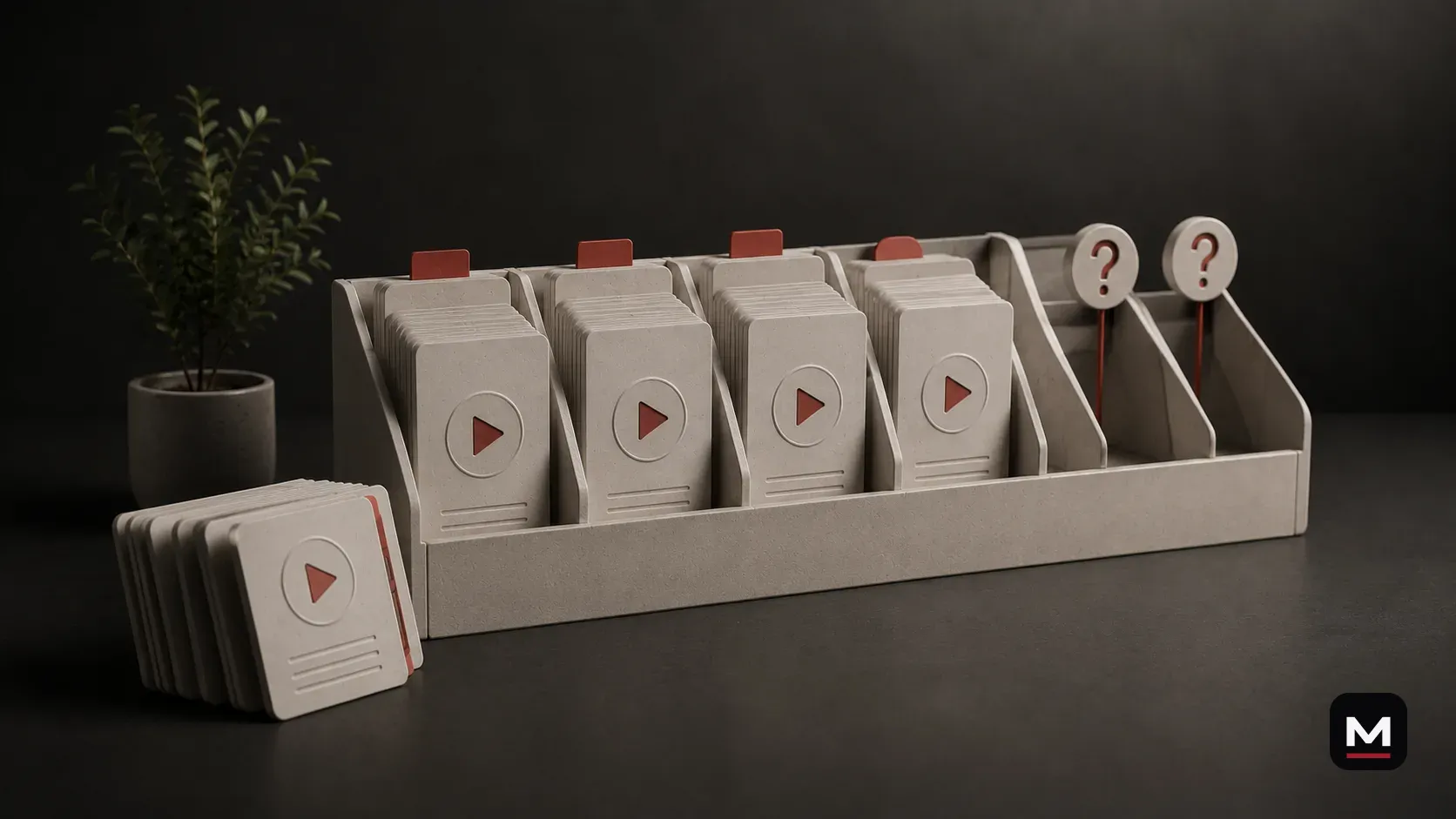
A content workflow audit is not a meeting where someone tells the business to post more.
It is a practical review of how ideas, footage, edits, approvals, publishing, and reusable assets actually move through the business, including where they stop moving. The result may include a simple workflow map, but the point is clearer action.
What an audit looks at.
The audit follows the real process instead of the process everyone thinks exists.
- Where content ideas come from and where they get stored
- Who decides what gets made
- How shoots and deliverables are planned
- Where footage, brand files, and final exports live
- Who reviews content and how feedback is collected
- What gets published, repurposed, or forgotten
- Where AI or automation could remove repetitive work
Common problems it finds.
Good footage sits on drives because nobody knows what is there. Ideas disappear in text threads. Several people give conflicting feedback. The person posting does not have enough usable material. Every new request starts from zero.
These problems look like a need for more content. Often, the business first needs a clearer path for the content it already has.
A finished audit might include.
The exact deliverable depends on the business, but a useful audit should leave behind specific direction instead of vague encouragement.
- What is currently working
- What is confusing buyers
- Where content is getting wasted
- Missing customer questions
- Recommended content themes
- Reusable shoot ideas
- Workflow fixes
- Priority next steps
What the business should receive.
A useful audit ends with a deliverable, not an open-ended conversation.
- A map of the current workflow and its biggest friction points
- Clear ownership and approval recommendations
- A simpler folder, footage, and asset structure
- Practical priorities for production, editing, or repurposing
- A realistic next-step plan the existing team can use
Who it is useful for.
A content workflow audit is useful when a business already has a marketing person, team, footage library, or steady stream of ideas but still struggles to turn those inputs into finished work.
It can also clarify whether the next investment should be production, editing, organization, training, or a smaller first project.
An audit should not replace the team.
A business with an in-house marketing person may not need another person taking over the calendar. It may need outside eyes to identify why footage never reaches the editor, why approvals stall, or why every shoot produces only one usable post.
The audit should give the existing team clearer decisions, ownership, and deliverables. If the result is only another call and a pile of vague advice, it did not solve the workflow problem.
When an audit is not the right first step.
If the business has one clear project, a focused quote may be simpler. If there is no footage, no posting process, and no one responsible for content yet, starting with one useful shoot or edit may reveal more than diagramming a workflow that does not exist.
The audit earns its place when there is enough activity to review and enough friction to remove.
What to prepare before an audit.
The most useful audit starts with the real material: links to active channels, examples of finished work, existing footage, folder structures, approval steps, recurring requests, and the names of the people involved.
Do not clean everything up first. The messy handoffs and missing files are part of the evidence. The goal is to understand where the current process fails under normal conditions.
How to judge whether the audit was useful.
After the audit, the team should know what to make, what to stop doing, where material belongs, who decides, and what the next defined deliverable is.
If the recommendations cannot survive a busy week, they are not practical enough. A good workflow is not impressive on a diagram. It is easier to use when the business is moving.
Final take.
The goal is not to make the workflow impressive. It is to make useful content easier to finish, approve, find, and reuse.
If the team is doing the work but the process keeps stalling, a Content Opportunity Audit with workflow support may be the cleaner first step.
How this applies to businesses in Bend and elsewhere.
For a business with an owner, marketing person, or small team already handling content, outside workflow support can create a cleaner plan without replacing the people doing the work.
Based in Bend, Oregon, outside audits and workflow support can clarify the process without replacing the people already doing the work.
Related questionsAnswers if you want more context
What is a content workflow audit?
A content workflow audit looks at how ideas, footage, approvals, edits, publishing, and repurposing currently move through the business. The goal is to find where content gets stuck and what process would make the next useful asset easier to create.
What is a Content Opportunity Audit?
It is a paid diagnosis and direction deliverable for the business's current content, platforms, footage, gaps, workflow, and goals. The result is a clear written recommendation for what is working, what is missing, and what is worth making next.
Can the audit include workflow or repurposing direction?
Yes. When needed, a paid Content Opportunity Audit can include workflow mapping, repurposing direction, content gap review, or execution planning. That is useful when the problem is not only what to film, but how ideas, footage, review, and reuse keep getting stuck.
Can Maverick Beach Creative work with an existing marketing team?
Yes. Outside support can give an existing team a better shot list, edit, content direction, audit, repurposing plan, or workflow without replacing the people already doing the work.
Do you charge hourly?
Most projects are quoted by deliverable, not by the hour. The goal is to give the business something useful: a finished edit, shoot plan, Content Opportunity Audit, caption system, workflow direction, or a realistic production scope.
Sources1 reference used for context
This guide combines source-backed context with Maverick Beach Creative’s working approach to planning and producing small-business content.
- How Work About Work Gets in the Way of Real Work — AsanaSupports the cost of fragmented tools, unclear ownership, and process overhead.