
Editing Smarter
How to Choose the Right Camera and Production Gear for the Job.
Phones, GoPros, drones, Sony bodies, lenses, and professional tools all have a place. The smarter question is not what gear is best. It is what the moment, message, and final use actually need.
By Maverick Beach / June 10, 2026
This guide combines source-backed context with Maverick Beach Creative’s working approach to planning and producing small-business content.
Gear matters. Anyone who says it does not is usually oversimplifying.
A good camera body, the right lens, clean audio, a drone, a GoPro, a phone, a light, a mount, or a stabilizer can absolutely change what is possible. Gear can solve real problems: low light, distance, motion, safety, audio clarity, shallow depth of field, aerial perspective, and repeatable quality.
But gear is not the strategy. The better question is not, "What camera is best?" The better question is, "What does this moment need to become, and where will people actually see it?"
When a phone camera is enough.
Pew Research Center reports that 91% of U.S. adults own a smartphone. DataReportal's Digital 2026 overview also points to a world where mobile devices, internet access, and social platforms shape how people discover and judge businesses.
That matters because the phone is not just a backup camera anymore. It is often the camera that is actually present when the real thing happens: the rush before service, the customer reaction, the behind-the-scenes problem being solved, the first test drive, the product being used, or the one moment nobody planned.
Modern viewers are used to seeing real moments through phone footage. A clip does not become valuable because it was shot on an expensive camera. It becomes valuable when it captures something people care about clearly enough to understand and feel.
Authenticity is not an excuse for sloppy work.
Authentic does not mean lazy. A shaky, dark, muffled clip still has limits. But polish is not the only thing viewers are evaluating.
On social platforms, people often respond to timing, honesty, specificity, usefulness, and real access. A phone clip from the right place at the right time can outperform a polished shot that feels staged, vague, or disconnected from the actual business.
That is especially true for restaurants, food trucks, bars, gyms, automotive shops, fabrication shops, outdoor brands, product brands, local teams, and motorsports. Real work has texture. If amateur gear catches that texture at the right moment, do not throw it away because it was not captured on a cinema rig.
GoPros have a place.
GoPros and action cameras are not magic either. They are useful because they can go places other cameras should not: mounted to a vehicle, placed near movement, used around water, clipped into an active environment, or set up for point-of-view coverage.
For motorsports, outdoor work, team sports, behind-the-scenes movement, process footage, and POV details, an action camera may capture the angle that makes the edit feel alive.
The mistake is using a GoPro for everything just because it is convenient. Wide action footage can get repetitive fast. It works best when it adds perspective, motion, risk, or context that another camera cannot capture as easily.
Professional camera gear still matters.
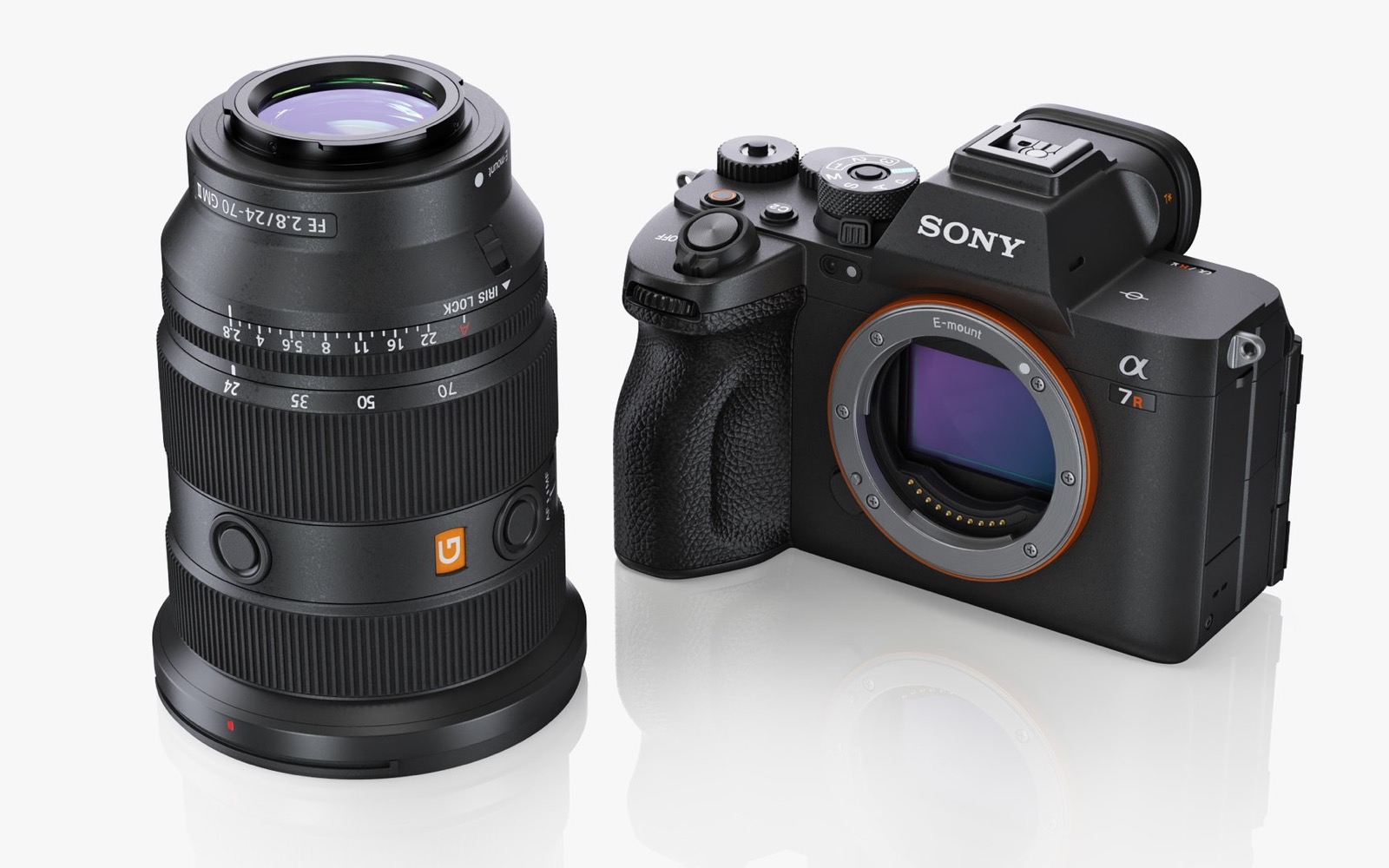
This is not an anti-gear argument. Professional cameras, Sony bodies, good lenses, proper settings, stable support, lighting, and clean audio still matter when the job calls for control.
A professional camera setup can create a more intentional look, better low-light performance, stronger lens choices, cleaner files, better color latitude, longer-form consistency, and a more polished visual language. It matters for brand films, launch assets, interviews, product detail, website hero content, controlled scenes, and deliverables that need to feel more finished.
The point is not that phones replace professional gear. The point is that professional gear should be used because it solves the right problem, not because it makes the shoot feel more legitimate.
Use drone footage when it adds useful context.
Drone footage can be extremely useful when it shows scale, location, access, terrain, movement, property, event flow, or the relationship between a business and its environment.
But a drone shot is not automatically valuable just because it looks expensive. If the aerial view does not add context, it can become decoration.
The same rule applies: use the drone when the aerial perspective explains something the ground camera cannot. Do not force it into the edit just to prove there was a drone on the job.
Choose gear based on the job.
It is easy to become the person who talks more about camera brands, codecs, lenses, and specs than the actual story, customer, or business outcome.
That is backwards. Gear should serve application. Application means the use case: what needs to be captured, why it matters, where it will live, how fast it needs to move, what the audience needs to understand, and what the final asset needs to do.
A business does not need content made by someone who worships gear. It needs content made by someone who knows when the phone is enough, when the GoPro is the right angle, when the drone adds meaning, and when professional camera gear is worth bringing out.
A simple way to choose the right tool.
Before picking a camera, pick the job. Then choose the gear that makes that job easier, clearer, safer, or stronger.
- Use a phone when speed, access, authenticity, and timing matter most.
- Use a GoPro or action camera when the camera needs to be mounted, protected, close to movement, or inside the action.
- Use a drone when location, scale, movement, or aerial context actually changes what the viewer understands.
- Use professional camera bodies and lenses when the piece needs visual control, consistency, depth, low-light performance, polished interviews, product detail, or a stronger brand look.
- Use dedicated audio whenever speech, sound, or clarity matters. Bad audio can ruin footage from any camera.
Editing determines how the footage is organized and used.
Raw footage is potential. Editing turns that potential into something useful.
A phone clip may need trimming, captions, pacing, cleanup, sound, and context before it works. A Sony camera clip may need the exact same thing. A drone shot may be beautiful and still need to be cut down to three seconds. A GoPro angle may work best as one quick hit inside a larger sequence.
This is why the gear conversation cannot be separated from editing. The right question is not just, "What captured this?" It is, "How does this footage help the finished piece do its job?"
Choose the simplest camera and audio setup that can do the job.
Do not underestimate amateur gear. Do not worship professional gear. Use the tool that fits the moment.
Phones, GoPros, drones, Sony bodies, and lenses can all belong in the same content system when each one has a reason to be there.
The strongest business content usually comes from application: noticing the right moment, capturing it with the right tool, shaping it with a strong edit, and delivering it where customers actually look.
How this applies to businesses in Bend and elsewhere.
For a small business with existing footage, the cleanest first move may be editing rather than another shoot. Strong structure, pacing, sound, and platform versions can make the material far more useful.
Based in Bend, Oregon, the edit is built around structure, sound, pacing, color, and finished versions that make new or existing footage easier to use for local and remote clients with organized footage links.
Sources9 references used for context
This guide combines source-backed context with Maverick Beach Creative’s working approach to planning and producing small-business content.
- 2026 State of Video Report — WistiaProvides context on modern video workflows, distribution, and repurposing.
- Video Content Creation Strategy, Tips & Tools — YouTube CreatorsSupports planning video around the audience, topic, format, and purpose.
- Mobile Fact Sheet — Pew Research CenterShows that 91% of U.S. adults own a smartphone, which supports the point that capable capture tools are already in most people's pockets.
- Social Media Fact Sheet — Pew Research CenterShows broad use of YouTube, Facebook, Instagram, TikTok, and other social platforms where modern business content is discovered.
- Digital 2026 Global Overview Report — DataReportalProvides global context on mobile users, smartphone connections, internet adoption, and social media use.
- State of Video Report: Video Marketing Statistics for 2026 — WistiaSupports planning video around modern marketing workflows, repurposing, and distribution.
- GoPro Official Camera Lineup — GoProSupports the role of action cameras for activities, POV capture, mounting, and movement-heavy moments.
- DJI Official Website — DJISupports the role of drones and camera systems for aerial perspective, scale, movement, and location context.
- Sony Interchangeable-Lens Cameras — Sony ElectronicsSupports the role of professional mirrorless camera bodies and lenses when quality, control, depth, and consistency matter.